Best OpenCode Alternatives (2026)
 By @pickwise
The best OpenCode alternatives are the terminal coding agents developers say they moved to in blog posts and Hacker News threads, checked against independent hands-on reviews.
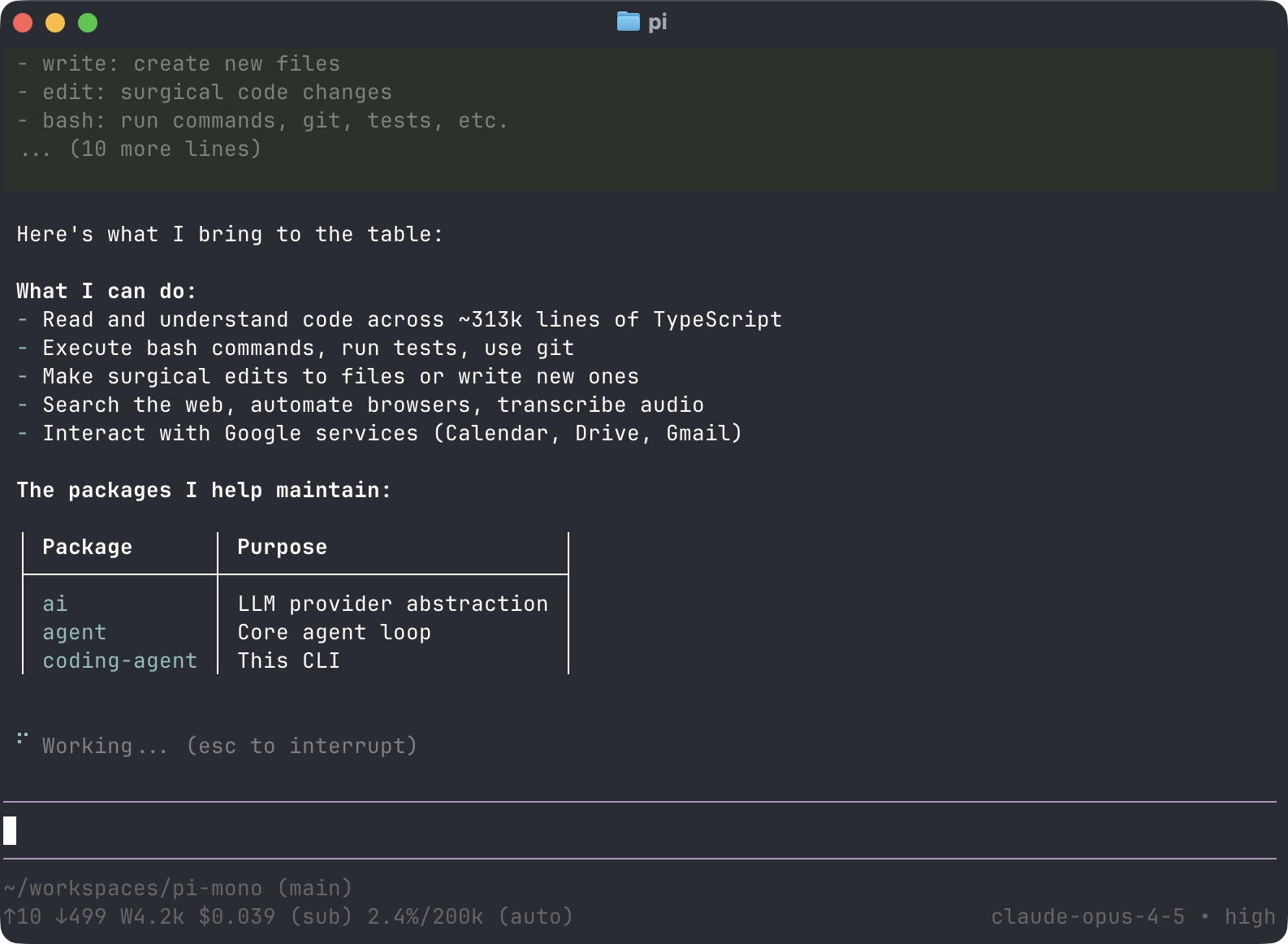
Pi
The agent people name most often when they leave OpenCode. Federico Cervelli swapped an OpenCode config of more than 200 lines for three short files and found he could read Pi's whole system prompt on one screen. It ships without plan mode, sub-agents or permission prompts, and you add what you need as extensions. Cervelli says the first week hurt, and Hacker News user Havoc still misses plan mode.
- Price
- Free; pay your model provider or sign in with a subscription
- Open source
- Yes, MIT
- Models
- 15+ providers, including OpenRouter and local models through Ollama
- Platforms
- macOS, Linux, Windows
- GitHub stars
- 114,394
- Maker
- Earendil Inc.
Claude Code
Felipe Fontoura left for OpenCode in May 2026, built twelve agents on open models, then came back, because a Claude subscription only covers Anthropic's own harness and open models at a similar price were the wrong trade. Pickuma's reviewer calls it the most polished of the terminal agents he ran. It is closed source and runs Claude models only, and Pedro Pinho notes its Bash sandbox is off until you turn it on.
Codex CLI
Pedro Pinho at Alongside makes it the default pick for most teams because it is safe before you configure anything: writes are limited to the workspace, network access is off and an operating-system sandbox enforces both. The client is Apache-2.0 and accepts custom model providers, but it is built for OpenAI models on a ChatGPT plan, and Plus is the lowest tier whose listing includes the CLI.
oh-my-pi
A fork of Pi with the missing pieces already built in: sub-agents, language-server and debugger tools, and more than 60 providers. Jonathan Reis moved to it from Claude Code, Cursor and OpenCode for that reason, and several Hacker News users rank it above both Pi and OpenCode. The catch is the reverse of Pi's. One commenter mocks its long system prompt, and another still found it unpolished.
- Price
- Free; pay your model provider
- Open source
- Yes, MIT
- Models
- 60+ providers
- Platforms
- macOS, Linux, Windows (native, no WSL)
- GitHub stars
- 35,109
- Maker
- Stencil Labs; a fork of Pi
Crush
Charm builds terminal interface libraries that thousands of other apps use, and it shows here. Joe Rice-Jones at XDA says Crush pulled in his Claude Code config and shows the API cost of each step in the sidebar. It is a single Go program that switches models mid-session. Two catches: you can't sign in with a Claude, ChatGPT or Gemini subscription, and the FSL license bars competing products until each release turns MIT after two years.
goose
The pick when you don't want one company in charge: goose is Apache-2.0, started at Block and now sits with the Agentic AI Foundation at the Linux Foundation. It has a CLI and a desktop app and can use a Claude, ChatGPT or Gemini subscription. Attila Macskásy got about 2,400 lines of correct code from it on a local model, then watched it loop for two hours on a vaguer task. By default it acts without asking.
Antigravity CLI
Google's replacement for Gemini CLI, run as agy. Jessica Wachtel at The New Stack found it could edit files and run tests in scripted mode where Gemini CLI could not, and Sumit Patel uses it daily for small changes in existing code but got a poor result building from scratch. Unlike Gemini CLI it is closed source, and the free allowance is a weekly quota that reviewers report running out quickly.
Aider
The oldest project here and the easiest to undo: every edit becomes a git commit you can revert. When kenimo49 ran the same twelve tasks through three agents on a local Qwen model, Aider finished all twelve with the smallest prompt, ahead of OpenCode and Qwen Code. The catch is upkeep. The repository has had no commits since May 22, 2026, and comparisons note it documents no MCP support.
- Price
- Free; pay your model provider or run local models
- Open source
- Yes, Apache-2.0
- Models
- Almost any LLM, including local models
- Platforms
- macOS, Linux, Windows
- GitHub stars
- 49,478
- Maker
- Aider AI
GitHub Copilot CLI
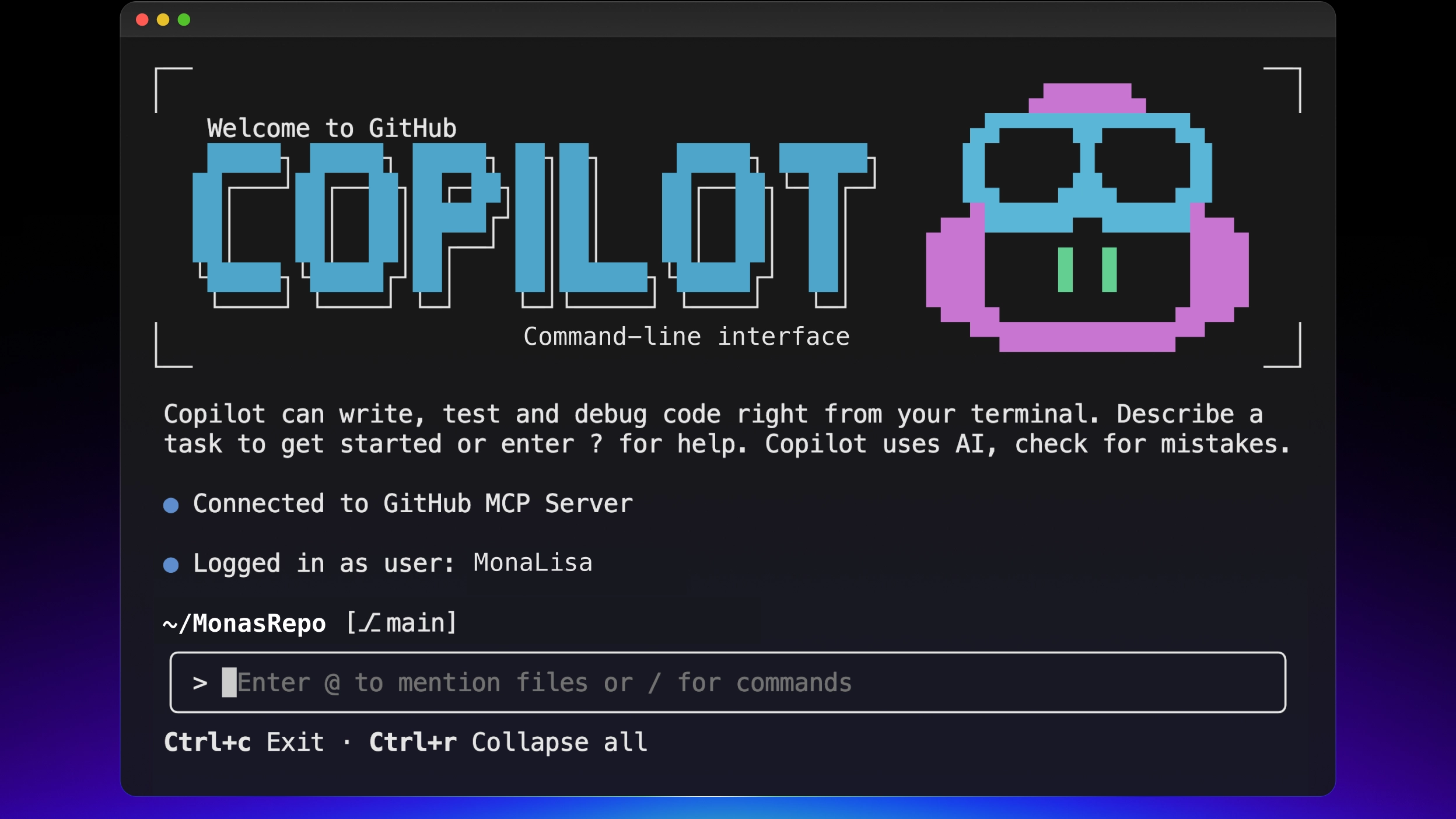
Worth a look if you or your employer already pay for GitHub Copilot, because the CLI is included in every plan, the free one too. Hacker News user gwerbin describes it as a lot like OpenCode but stripped down, and one subscription reaches both Claude and GPT models. Quibblingeek, who moved from OpenCode to oh-my-pi, finds it more limiting. Usage draws on monthly AI credits, and the client is not open source.
Qwen Code
Qwen's team started from Gemini CLI and has developed it independently since, adding sub-agents, approval modes and support for OpenAI, Anthropic and Gemini style APIs. It suits people who run Qwen models. In kenimo49's local test it finished 10 of 12 tasks and took 45 minutes to set up, with a first prompt of about 19,400 tokens. Older guides promise 1,000 free requests a day, but that free tier ended on April 15, 2026.
- Price
- Free; pay a model provider or an Alibaba Cloud Coding Plan
- Open source
- Yes, Apache-2.0
- Models
- OpenAI, Anthropic, Gemini and Qwen APIs; local via Ollama or vLLM
- Platforms
- Linux, macOS, Windows
- GitHub stars
- 28,434
- Maker
- Qwen (Alibaba Cloud)

How to choose
If OpenCode feels bloated, get Pi, or oh-my-pi if you want Pi with the tools already built in. If you want one vendor's best models at a flat monthly price, get Claude Code or Codex CLI. Codex is the one that sandboxes commands by default. If you want open source with any model and no single company in charge, get Goose. If you want the nicest terminal interface, get Crush. If you already pay for GitHub Copilot, its CLI is included.
A few things the makers' pages won't tell you. OpenCode 2 has a new plugin API, so OpenCode 1 plugins don't run on it, and that is a reason recent switchers give on Hacker News. Crush grew out of an older Go project that was also called OpenCode, and its license is source-available, not open source. Gemini CLI stopped serving personal accounts on June 18, 2026, and Antigravity CLI replaced it. Aider has had no commits since May 22, 2026. Kilo CLI is built on OpenCode, so switching to it changes little. A free agent still needs a model: you pay a provider per token or run one on your own hardware.
The list is ordered by how many independent developers and reviewers recommend each agent, then by GitHub stars, then by price.
Prices checked October 11, 2026.
More guides like this
OpenCode Plugins (2026): Which Still Work on OpenCode 2
The best OpenCode plugins, and which ones work on OpenCode 2, ranked by how many developers outside each project say they use them, in blog posts, hands-on reviews and Hacker News threads. If your sessions run out of context, start with Dynamic Context Pruning. If you want the agent to plan before it codes, get Superpowers, or Plannotator to review plans in a browser. For a team of subagents, oh-my-opencode-slim is the one that runs on the current version. For memory that stays on your machine, opencode-mem. The thing no plugin page says loudly: OpenCode 2.0 came out in September 2026 with a new plugin system, and plugins written for OpenCode 1 do not load on it. Older guides tell you to add a package name to the "plugin" list in opencode.json, which OpenCode 1 then installs at startup. On OpenCode 2 the list is called "plugins" and there is a command for it, opencode plugin add <package>. Check the Works with line on each pick before you upgrade. OpenCode 1 still gets releases. Two names to keep straight. The OpenCode here is the one at opencode.ai, now in the anomalyco/opencode repository on GitHub. An earlier Go project with the same name, opencode-ai/opencode, is archived and continues as Crush. And oh-my-opencode was renamed oh-my-openagent. Plugins that sign you in with a Claude or Gemini subscription are left out. Google and Anthropic treat that as against their terms, the popular Antigravity one is archived, and accounts have been flagged. A plugin runs with your full permissions, so read what you install. Ordered by how many independent recommendations each plugin has, then by downloads and stars. A plugin that does not load on the current OpenCode ranks below the ones that do. Numbers checked October 17, 2026.
OpenClaw Alternatives (2026): Safer and Easier to Run
The best OpenClaw alternatives are other personal AI agents you message from a chat app, self-hosted or hosted. These picks rest on write-ups by people who switched and on what developers on Hacker News say they run now. People leave OpenClaw for four reasons: updates that break things, token bills, the work of running it, and security. If it kept breaking, most switchers land on Hermes Agent, which imports your OpenClaw memory and skills. If you want code you can read and agents locked in containers, pick NanoClaw. For a small VPS, a Raspberry Pi or a $10 board, look at ZeroClaw or PicoClaw. If you never want to run a server again, Claude Cowork, Grok Bot and Manus do the hosting for a monthly fee. A few things the makers' pages won't tell you. None of the open-source agents is free to run: you still pay a model provider, and switchers report $10 to $20 a month on cheap models and far more on top ones. People who moved to Claude's own tools say Anthropic stopped Claude subscriptions from covering OpenClaw in April 2026. NemoClaw is a sandbox that runs OpenClaw or Hermes inside it, not a replacement. QwenPaw was called CoPaw until April 2026. Perplexity's Computer and Personal Computer are different products. Hosted agents bill in credits or weekly allowances that are hard to predict. And a smaller codebase is easier to audit, but any agent holding your logins can still be tricked by a hostile web page or message. Ordered by how many independent users and reviewers recommend each one, then by GitHub stars, then by price. Prices checked October 11, 2026.
Best Local LLMs for Coding (2026)
The best local LLM for coding depends on how much memory your machine has. This list ranks open-weight models you can run yourself, by independent benchmark runs and by developers who use them in coding agents. With 24 to 32 GB, start with Qwen3.8-27B. Its 17 GB 4-bit file matched the full model on Terminal-Bench 2.1 in Quesma's test. With 128 GB of unified memory, Qwen3.8-Flash-Next posted the top score in WonderRico's benchmark. With 16 GB, gpt-oss-20b fits whole on the card, and one developer reports useful work from a 2-bit Qwen3.8-27B. With 8 GB, try Qwen3.5-9B and keep the jobs small. At 64 GB, run the 27B models at 8-bit, a 29 GB file, with a longer context. The step above that needs about 100 GB. A coding agent only works if the model emits tool calls your server can parse. Gemma 4 shipped with broken tool calling that was fixed later, and Qwen chat templates have needed community fixes, so update Ollama, LM Studio or llama.cpp before blaming the model. Agents also need room: LM Studio loads models with an 8,192-token context unless you raise it. Scores on a model card are the maker's own. A mixture-of-experts model computes with a few billion parameters per token but still has to hold all of them in memory, and context takes memory on top of the file. Qwen3.8 thinks at its highest effort by default, which is slow on home hardware. Qwen3.8-Flash-Next is not Apache licensed. Older guides still recommend Qwen2.5-Coder, Qwen3-Coder and Devstral, which general-purpose models beat in the hands-on tests cited here. The list is ordered by how many independent testers and developers recommend each model for coding, then by downloads. Numbers checked October 11, 2026.
OpenRouter Alternatives (2026): Cheaper or Self-Hosted
The best OpenRouter alternatives, hosted routers and gateways you run yourself, picked from developers who switched and reviewers who measured them. Each one still gives you one API for many AI models. Match the pick to your reason for leaving. If it is the 5.5% fee on credits, Vercel AI Gateway charges no markup, and Cloudflare AI Gateway is free when you bring your own provider keys. If you want no middleman at all, self-host LiteLLM, or Bifrost if LiteLLM's latency bothers you. If your data must stay in Europe, look at Cortecs or Requesty. If you are tired of one model behaving differently from host to host, buy from a single host such as Fireworks AI, Together AI or Groq, or use OpenCode Zen's short tested list. This market changed fast in 2026, so older guides are wrong in places. Stripe announced in August that it is buying OpenRouter. Palo Alto Networks bought Portkey in May. Helicone has been in maintenance mode since Mintlify bought it in March, and TensorZero's repository is archived, which is why neither is here. LiteLLM had two poisoned releases on PyPI in March (1.82.7 and 1.82.8), so pin your version. Self-hosting takes the gateway company out of the path, but your prompts still go to whichever model provider you call. And OpenRouter's fee is charged when you buy credits, with an $0.80 minimum, so small top-ups cost more than 5.5%. The list is ordered by how many independent developers and reviewers recommend each option, then by adoption, then by price. Prices checked October 11, 2026.
Best Pi Coding Agent Extensions (2026)
The best extensions for the Pi coding agent (some people call them plugins), picked from the setups developers publish and the write-ups that tested them, not from download counts alone. Pi is deliberately bare: no sub-agents, no plan mode, no permission prompts. You add what you miss with one command, pi install npm:<package>. If you are starting out, three cover most of the gap with Claude Code: pi-subagents for delegation, pi-web-access for search, and rpiv-ask-user-question so the model asks before it guesses. Add Plannotator if you want plan mode, and pi-permission-system if you don't want the agent free to run anything. Two things have changed that older guides miss. Pi has had MCP support built in since version 0.99, so pi-mcp-adapter is now an upgrade and no longer a requirement. And several popular names have lookalikes: npm has at least four other packages named pi-mcp-adapter under other people's scopes, and more than one /btw extension, so install by the exact name shown here. Extensions run with the same access to your machine that Pi has. Pi's catalog lists more than 5,000 packages, so read the source of anything that touches your shell or credentials, and pin versions you depend on. Ordered by how many independent users and reviewers recommend each one (Kay Rhodes's setup guide, Composio's tested top ten, developers on Hacker News and Pi's own GitHub discussions), then by npm downloads and GitHub stars. Downloads count automated installs too, so treat them as a rough signal. Numbers checked October 10, 2026.
Claude Code Plugins (2026): What Developers Install
The best Claude Code plugins, picked from the setups developers publish after pruning their own installs and from Hacker News threads where people say what they kept, not from install counts alone. A plugin is a bundle. One install can carry skills, slash commands, subagents, hooks and MCP servers. A skill is a single instruction file Claude loads when it judges it relevant, and an MCP server is a connection to an outside tool, so a plugin can contain both. Type /plugin inside Claude Code to browse Anthropic's official marketplace, which is connected from the start, or run /plugin install name@claude-plugins-official. For anything else, add the maker's marketplace first with /plugin marketplace add owner/repo. If you install one thing, make it Superpowers, plus the LSP plugin for your language. Add Security Guidance if you ship code you don't read line by line, Plannotator if you want to mark up plans in a browser, and Claude HUD to see how full the context is. Every enabled plugin adds to the context on every turn, and several of the writers quoted here deleted more than they kept. Plugins run code on your machine with your permissions, and community marketplaces are not reviewed, so read what a plugin will install before you say yes. Two names trip people up. Claude Code has a built-in review command alongside the Code Review plugin. And Anthropic keeps a second, smaller marketplace in the anthropics/claude-code repo, where the loop plugin still goes by ralph-wiggum and not ralph-loop. The list is ordered by how many independent people recommend each plugin, then by installs and GitHub stars. Prices checked October 11, 2026.