Best Grok Bot Use Cases and Workflows (2026)
 By @pickwise
These Grok Bot use cases and workflows are the jobs paying users report running, drawn from walkthroughs by Claire Vo, Matthew Berman, Peter Yang and Alex Finn. The ones that hold up end in a draft you approve.
Chief of Staff Bot
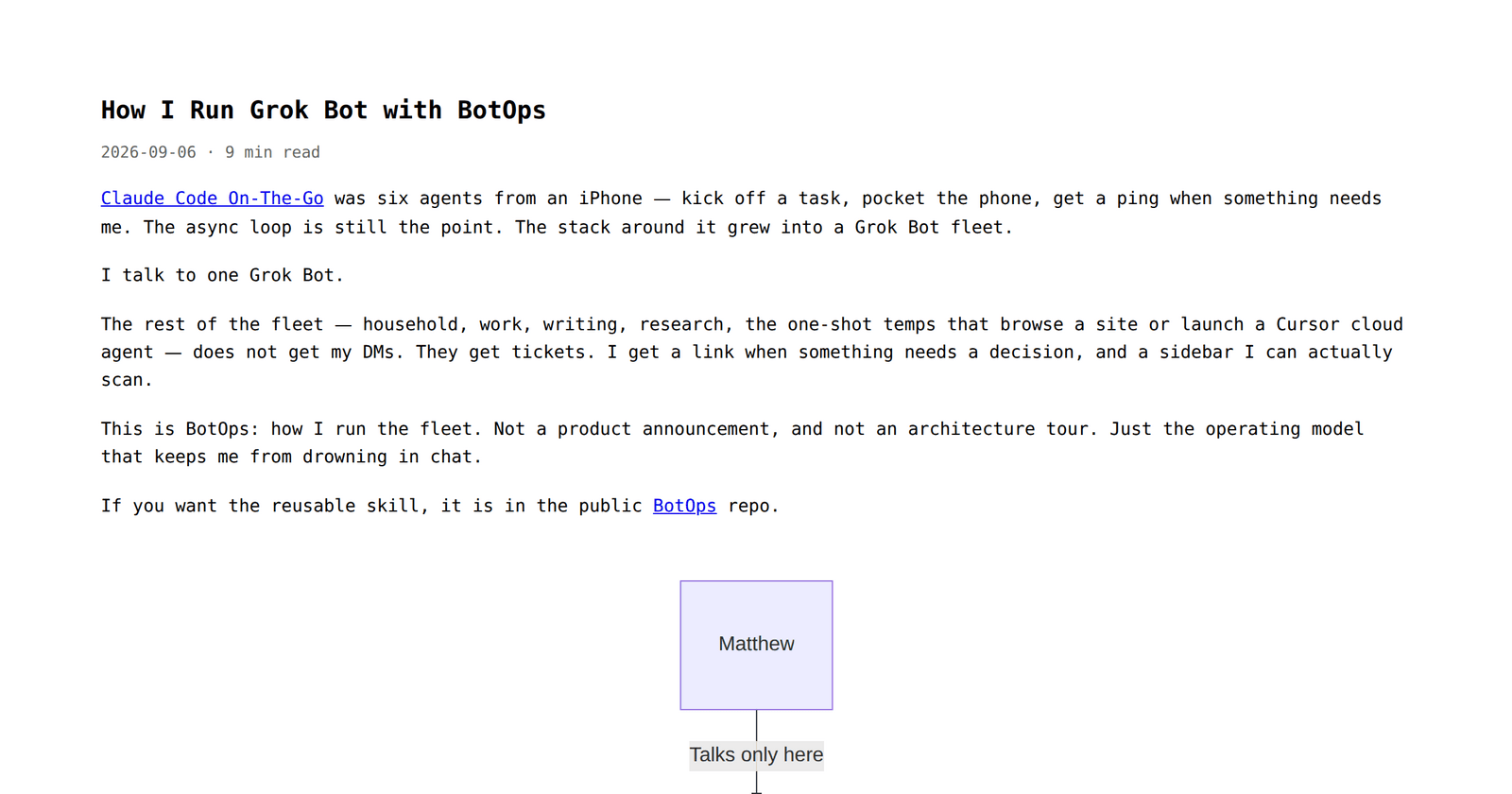
Nearly every published Grok Bot setup routes work through one pinned coordinator that hands jobs to specialists, from Claire Vo's Chief, which sweeps six inboxes hourly, to Granda's BotOps fleet, where only the chief of staff ever messages him. Chris Alarcon names it one of two bots he would keep. The catch is cost: chatter between bots draws on the same weekly usage pool, and long threads cost more every turn.
Inbox Triage With Drafts
Email is where the clearest payoff shows up. Alex Finn's 8 a.m. triage bot researches each sender and drafts replies to the three most promising emails in Gmail, and one of those drafts closed a $10,000 sponsorship. Matthew Berman's 7:30 routine batches mail that can be archived behind one button. Claire Vo still writes high-stakes email herself, because the default Grok voice reads clipped until it learns from your sent mail.
- Plan needed
- Premium ($30/mo) or higher on The X Subscription
- Runs on schedule
- Daily at 7:30am (Berman) or 8am (Finn); weekdays 9:05 and 4:05 (Inbox Manager)
- Apps it uses
- Gmail, Slack, DMs; Berman adds HubSpot and Google Drive for context
- Needs approval for
- Every send; Inbox Manager is read-only and leaves drafts
Coding Outer Loop for Cursor Cloud Agents
Here Grok Bot plans and checks while Cursor cloud agents write the code. Claire Vo's LGTM bot rebases, answers review comments and helped clear about 50 waiting PRs in one Friday. James Pember tried it because it plugs into the Cloud Agents his team already used. The catch is usage: Cursor staff advised handing heavy work to cloud agents to spare the bot's allowance, but on The X Subscription both draw from one shared weekly pool.
Daily News and Intel Scout
A scheduled scout that watches X, YouTube or company channels and sends a short brief is the second-largest group in AI Builder Club's ledger of builder posts. Peter Yang's YouTube researcher sends a morning brief of outlier videos and comment themes, and Alex Finn's Barry checks AI accounts every 30 minutes for breaking news. Expect a round of format fixes: Yang's first brief was hard to follow, and Chris Alarcon reads his News Scout with suspicion.
- Plan needed
- Premium ($30/mo) or higher on The X Subscription
- Runs on schedule
- Every 30 minutes (Finn); weekdays 8am and 5pm (Intel Scout template)
- Apps it uses
- X, YouTube, Slack, email, meeting notes
- Needs approval for
- Any send; the Intel Scout prompt says never send without your confirm
Content Repurposing Routine
Turning one finished piece into others is the creators' favourite. Alex Finn's content bot read every newsletter he had sent, learned his voice, and now turns one video a week into a newsletter draft he edits before sending. Aaron Makelky's bots add podcast music, write show notes and push episodes to Transistor about 95% finished. Chris Alarcon's Substack Notes publisher posts without him, though his Shorts tracker is still buggy. Makelky worked at Descript until August 2026.
- Plan needed
- Premium ($30/mo) or higher on The X Subscription
- Runs on schedule
- Weekly (Finn's video-to-newsletter routine)
- Apps it uses
- YouTube, newsletter app, Descript, Transistor, Substack
- Needs approval for
- Publishing; Finn and Makelky review every draft before it ships
Shopping, Returns and Errands
Browser errands are where the cloud computer earns its keep. Matthew Berman has his bot run Amazon returns end to end and hand back the QR code, and Claire Vo's shopping bot found bookcases at the exact 30-by-15-inch size she needed, some she hadn't found herself. The catch is new: Amazon reportedly blocks Grok Bot from placing orders, so buying there can stall.
- Plan needed
- Premium ($30/mo) or higher on The X Subscription
- Runs on schedule
- On request in Berman's and Vo's examples
- Apps it uses
- Amazon, DoorDash and other retail sites through the cloud browser
- Needs approval for
- Logins and payment confirmations; you take over the computer
Listing and Fare Watch
A routine that checks listings or prices and stays quiet until something is worth a look is one of the cleanest fits. Peter Yang's travel bot read his Japan itinerary and found a Tokyo round trip about $2,700 cheaper than his planned open-jaw route, something a plain fare alert would never suggest. Granda's home-hunt swarm checks Zillow and Redfin twice a day. Expect most runs to find nothing.
- Plan needed
- Premium ($30/mo) or higher on The X Subscription
- Runs on schedule
- Twice daily, 9:00 and 18:00 PT (Granda's home hunt)
- Apps it uses
- Zillow, Redfin, Google Flights, Notion
- Needs approval for
- Booking or buying; Yang hasn't let it book flights yet
Podcast and Video Summaries
A bot works through long episodes and videos for you and returns notes in the format you want. Investor Gavin Baker says his podcast summarizer took about 15 seconds to build and beat what he had before. Chris Alarcon says his Distribution Scout, which watches long videos for him, earned its keep fastest of all his bots. Neither shared a prompt, so the closest copyable setup is a SpaceXAI staff guide.
- Plan needed
- Premium ($30/mo) or higher on The X Subscription
- Runs on schedule
- Weekly roundup in SpaceXAI's media-rundown prompt (GTM guide)
- Apps it uses
- Podcasts, YouTube, webinars, X, web search
Sponsor and Brand-Deal Inbox Scoring
Creators who live on brand deals use a bot to score inbound pitches before they read them. Matthew Berman's routine labels mail every 30 minutes on weekdays, scores each sponsorship email and archives the spammy ones, and Alex Finn's bot checks whether each sender's company is real before drafting replies to the best three. The catch is the rubric: Berman built his scoring rules in another agent first and says you may need to work yours out.
Blog-to-Social Cross-Posting
A publishing bot takes one finished post and puts it everywhere else. Debbie O'Brien's blog bot publishes each post to her site, then Dev.to, LinkedIn and X, and her LinkedIn bot posted live in her voice on its first day. Nevo Mashiach's video-to-article bot drew 201k article views from a video with 83k, per AI Builder Club. X is the snag: O'Brien's X bot stalled asking for a developer bearer token.
- Plan needed
- Premium ($30/mo) or higher on The X Subscription
- Apps it uses
- Her blog, Dev.to, LinkedIn, X, YouTube (O'Brien)
- Needs approval for
- Each post: O'Brien reviews the draft, then says post it
Monthly Trend Research Sweep
Before writing, a research bot checks what people actually said about a topic this month across X, YouTube, Reddit, Hacker News and the web. Alex Finn runs Matt Van Horn's open-source last30days skill as a standing research bot, and Hiten Shah turned it into a bot his other bots call for research, one he says he'd keep. Setup is the catch: it installs code from GitHub and walks you through a ScrapeCreators sign-up for TikTok and Instagram.
- Plan needed
- Premium ($30/mo) or higher on The X Subscription
- Runs on schedule
- On request; checks GitHub for a skill update every 30 days
- Apps it uses
- Reddit, X, YouTube, TikTok, Hacker News, Polymarket, GitHub, the web
- Needs approval for
- Cookies and API keys during first-run setup
Meeting Summaries and Call Prep
Matthew Berman ranks this with email triage as his two most powerful jobs: every 30 minutes his bot checks Fathom for new recordings, then writes the summary and who owes what. James Pember's bot now builds his fortnightly product-marketing pre-read from release notes, GitHub and Slack and sends it to the team. Acting on those action items unprompted is still untested; Berman describes it as his next experiment.
- Plan needed
- Premium ($30/mo) or higher on The X Subscription
- Runs on schedule
- Every 30 minutes (Berman); 15 to 35 minutes before each call (post-sales guide)
- Apps it uses
- Fathom, calendar, Slack, GitHub, release notes
- Needs approval for
- Sending recaps; drafts wait in Gmail (post-sales guide)
Support Queue Triage
Claire Vo calls her support bot's results astonishing: it sweeps Intercom and email every hour, drafts replies and can request refunds, which reach her as a one-click Stripe approval. James Pember's bot triages product bugs raised in Slack and found his team an instant workaround. Speed is the limit. Squad notes routines have no email trigger, so a new ticket waits for the next scheduled sweep.
- Plan needed
- Premium ($30/mo) or higher on The X Subscription
- Runs on schedule
- Hourly inbox sweeps plus a weekly playbook review (Claire Vo)
- Apps it uses
- Intercom, email, Stripe, Slack
- Needs approval for
- Refunds and replies to customers
Subscription and Refund Cleanup
Money-back jobs can pay for the plan outright. Peter Yang's Marie Kondo bot audited Gmail, Drive and receipts, then unsubscribed, trashed files and cancelled a subscription in about five minutes once he approved its numbered list. Darian Shirazi's bot found five merchants that never refunded his returns and emailed them, earning back more than the monthly fee, per Sid Saladi. Cancelling still needs you to sign in on the cloud computer.
- Plan needed
- Premium ($30/mo) or higher on The X Subscription
- Runs on schedule
- One-off audit; Yang plans weekly or monthly runs
- Apps it uses
- Gmail, Google Drive, Mercury bank MCP, merchant sites
- Needs approval for
- Every unsubscribe, delete or cancel (Yang's prompt)
Teach-a-Task Portal Runs
When a site has no API, you record yourself doing the job once and the bot saves it as a skill. Sid Saladi found this the most repeated tactic: Ryan Perry taught it a Meta Ads upload he couldn't do through the API, and roofer Price Foulger had it pull a city permit and book an inspection. Recordings stop at ten minutes, and a changed page layout can break the replay without an error.
- Plan needed
- Premium ($30/mo) or higher on The X Subscription
- Runs on schedule
- As a routine after a test run; schedules at least 5 minutes apart
- Apps it uses
- Any site in the cloud browser, e.g. Meta Ads Manager, city permit portals
- Needs approval for
- Passwords, 2FA, CAPTCHAs and payments; you take over the computer
Family and School Logistics Digest
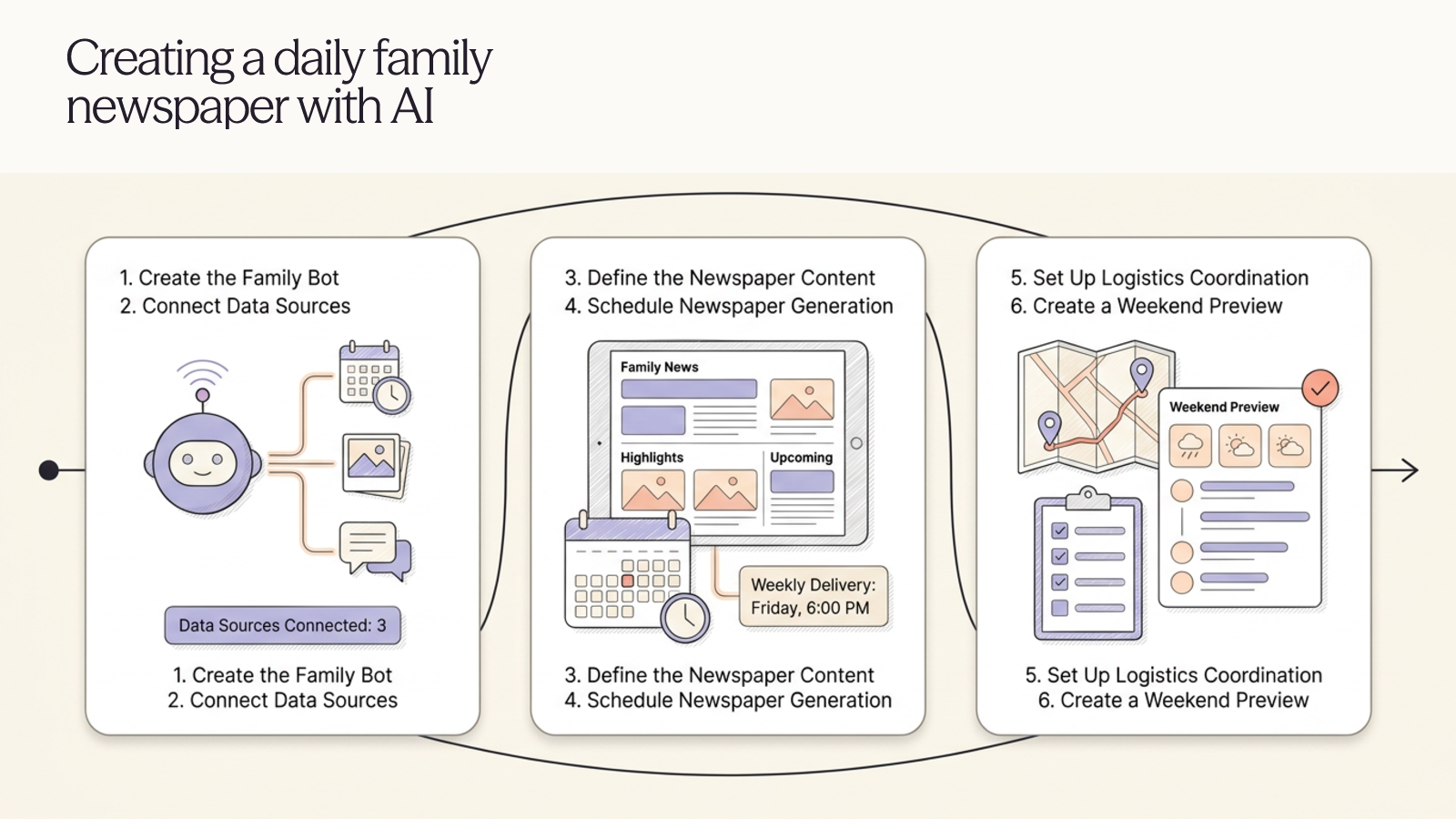
Parents describe this as the bot that gets them off the computer. Claire Vo's TradBot prints a one-page kitchen-table newspaper each morning from school email and the family calendar, then messages both parents at 2:30 to settle pickup. Matthew Berman's school bot reads school email at 7 p.m. and adds events to the calendar with his wife invited. Vo shares TradBot as a template, but you reconnect your own email and calendar.




How to choose
Grok Bot is SpaceXAI's always-on agent. Each bot works on a cloud computer that keeps going after your laptop closes. Show it a workflow once and it saves the steps as a skill, then a routine reruns that skill on a schedule. A template is a shareable link to a bot with its skills and routines.
If you will run more than two bots, start with a chief of staff, the one bot nearly every heavy user keeps. For a single first job, inbox triage that leaves drafts in Gmail has the most reported wins. Developers get most from the outer loop that hands code to Cursor cloud agents. At home, a school-email digest or a fare watch is the easy start.
What can Grok Bot do on its own? Read, research and draft around the clock. Sending, buying and deleting wait for your yes by design. Free and Plus plans don't include it.
What SpaceXAI's pages don't stress: all your bots share one cloud computer and its logins, so a second bot is not a security boundary. The weekly usage pool runs out fast, and a Cursor forum user on the $200 Ultra plan used 99% of a week in three days. Amazon reportedly blocks Grok Bot from placing orders. Guides quoting $200 or $300 a month describe launch-week access, since replaced by The X Subscription, where Premium at $30 a month is the cheapest plan with Grok Bot.
Ordered by how many independent users we found reporting each job running, then by whether they reported a measurable result. SpaceXAI staff guides count only to show a template exists.
Prices checked October 16, 2026.
More guides like this
Best Grok Bot Templates (2026)
These Grok Bot templates are the shared bots with outside evidence they work, from hands-on reports by users like Moritz of Prompt Warrior to picks by template reviewers Avid and Steal What Works. Most directory listings have none. A Grok Bot template is a bot someone shared as an x.ai/bot link: its instructions, skills and routines, without the maker's logins, files or chat history. What can Grok Bot do? Each bot works on a cloud computer with a browser and your connected apps, keeps going after your laptop closes, and waits for your yes before it sends, buys or deletes. The use cases that keep recurring are a chief of staff that routes work to other bots, inbox and calendar triage, sourced research, and an outer loop that hands code to Cursor agents. If you plan to build your own bots, add dr eggbot first. Projects Manager suits anyone juggling several projects at once. Parents get the most from Tradbot, developers from loops. Vet every template before adding it. Read its share page, then every skill and routine once it's in your app: it acts with whatever you connect, and SpaceXAI does not verify third-party bots. All your bots share one cloud computer, so a new template can use logins your other bots opened. Check who made it: several makers here work on Grok Bot, and X now pays invited creators when people use their templates, so a loud launch post is not proof. Bouncer, below, gives a verdict on any share link. Directory numbers mean little yet. ShareGrokBots counts single-digit adds and gtemplate.net counts views of a launch post on X, not installs. Every template needs Premium ($30 a month) or higher on The X Subscription and draws on the same weekly usage pool. Ordered by independent hands-on reports first, then by how many independent reviewers recommend each template, then by launch-post views. Prices checked October 16, 2026.
Best Claude Skills (2026)
The best Claude skills are the SKILL.md packages that Hacker News users and independent reviewers keep recommending. This list ranks collections and single skills you can install today, with what each adds and its catch. If you want Claude to plan and test before it codes, get Superpowers. If you want it to question you before it starts, get grill-me from Matt Pocock's skills. For better-looking pages, start with frontend-design and add Impeccable to review the result. To build your own skills, or to make real Word, Excel, PowerPoint and PDF files, use Anthropic's repository. For marketing work, use Corey Haines's pack. Skills install in three ways. In Claude Code, run /plugin install from a marketplace, or copy a folder into ~/.claude/skills. For most coding agents, npx skills add owner/repo does the copying. In the Claude apps, upload a ZIP under Customize > Skills. Skills follow the open Agent Skills format, so most of these also run in Codex, Cursor and Gemini CLI. Older guides are now wrong in places. Claude Code has merged custom commands into skills. Superpowers and Matt Pocock's skills are in Anthropic's official marketplace, so adding a separate marketplace is no longer needed. The Karpathy repository moved to a new owner. Star counts are huge and say little, and a link list such as awesome-claude-skills installs nothing. A skill is instructions plus scripts that run with your agent's permissions. Snyk scanned 3,984 skills from ClawHub and skills.sh and found a critical security issue in 13.4% of them. Read a skill before you install it, and install a few, not all. Items are ordered by how many independent people recommend each one, then by GitHub stars. Everything here is free. Numbers checked October 11, 2026.
OpenClaw Alternatives (2026): Safer and Easier to Run
The best OpenClaw alternatives are other personal AI agents you message from a chat app, self-hosted or hosted. These picks rest on write-ups by people who switched and on what developers on Hacker News say they run now. People leave OpenClaw for four reasons: updates that break things, token bills, the work of running it, and security. If it kept breaking, most switchers land on Hermes Agent, which imports your OpenClaw memory and skills. If you want code you can read and agents locked in containers, pick NanoClaw. For a small VPS, a Raspberry Pi or a $10 board, look at ZeroClaw or PicoClaw. If you never want to run a server again, Claude Cowork, Grok Bot and Manus do the hosting for a monthly fee. A few things the makers' pages won't tell you. None of the open-source agents is free to run: you still pay a model provider, and switchers report $10 to $20 a month on cheap models and far more on top ones. People who moved to Claude's own tools say Anthropic stopped Claude subscriptions from covering OpenClaw in April 2026. NemoClaw is a sandbox that runs OpenClaw or Hermes inside it, not a replacement. QwenPaw was called CoPaw until April 2026. Perplexity's Computer and Personal Computer are different products. Hosted agents bill in credits or weekly allowances that are hard to predict. And a smaller codebase is easier to audit, but any agent holding your logins can still be tricked by a hostile web page or message. Ordered by how many independent users and reviewers recommend each one, then by GitHub stars, then by price. Prices checked October 11, 2026.
Best AI Task Managers (2026)
The best AI task managers, where the AI does real work from planning your day to running agents on a board, picked from hands-on tests by Wirecutter, PCMag, Zapier and others. Match it to how you work. If you want AI to plan your day, Sunsama walks you through a daily plan, Reclaim fits tasks around your meetings and has a free plan, and Motion plans and reshuffles your whole calendar. If you want a fast list with a little AI, start with Todoist. Teams should try Asana first, ClickUp if they want everything in one app, or Notion if their work already lives in docs. Software teams belong in Linear. On a budget: Todoist Pro and Reclaim Starter together come to about $15 a month billed yearly and put your Todoist tasks on your calendar, less than Motion's $19 alone. Google Gemini schedules tasks into Google Calendar for free. Watch the AI add-ons: ClickUp's Brain AI costs $9 a user on top of the plan, Notion's agents need the $20 Business plan, and Motion, Asana and monday.com meter AI with credits or request limits. Ordered by wins in named hands-on tests, then by how many independent reviewers recommend each app, then by fit for individuals and small teams and by price. Disclosure: Wand is made by Automatique, the team behind Listicle; it's rated by the same criteria as everything else. Prices checked October 5, 2026.
Best AI Story Writing Apps (2026)
The best AI story writing apps, from drafting partners like Sudowrite to manuscript critics like ProWritingAid, ranked on reviews by Kindlepreneur, Reedsy, The Write Practice and others. Match the tool to the job. To draft with an AI partner, Sudowrite works out of the box, while Novelcrafter gives you more control if you bring your own AI key. To revise, ProWritingAid catches line-level problems, Fictionary checks scene structure and Marlowe sends a whole-book report. For brainstorming or notes on a full draft, a general chatbot works: Claude for prose, ChatGPT for features, Gemini for very long manuscripts. On cost: Raptor Write is free and you pay only for the AI you use, and Gemini's Plus plan is $4.99 a month. Sudowrite's Hobby plan and ProWritingAid Premium together come to about $20 a month on yearly billing. Most of these meter AI use in credits or tokens, so heavy drafting can cost more than the plan price. Ordered by how many independent reviewers tested or recommended each app, then by how well it suits writing your own fiction, then by price. Disclosure: Fable is made by Automatique, the team behind Listicle; it's rated by the same criteria as everything else. Prices checked October 5, 2026.